Shauna Reynolds
show & tell
words & pictures & sounds to enjoy


Visitors to Murfree Spring Wetlands in Murfreesboro Tennessee often come face-to-face with a yellow-crowned night heron.
“Professor Walck says this is probably the most photographed heron in Murfreesboro," says MTSU senior Caroline Crosslin.
"He comes here often and notices people photographing it."
A yellow-crowned night heron perches on a fence at Murfree Spring Wetlands in Murfreesboro, Tennessee.
Crosslin is one of many students who enjoy peaceful moments at the park, which covers about 25 acres just off Broad Street near downtown Murfreesboro. In no traffic, the park is about a five-minute drive from MTSU. As anyone who spends time in Murfreesboro knows, “no traffic” is a myth. Despite the ongoing sounds of cars, trains, and planes, parkgoers can almost forget how close they are to the city. Bird songs, frog calls, and the chirping of insects fill the air. Even human voices lower to a whisper so as not to disturb the creatures they wish to see.

Ecology major Caroline Crosslin looks for birds, turtles, and the elusive otters at Murfree Spring Wetlands.
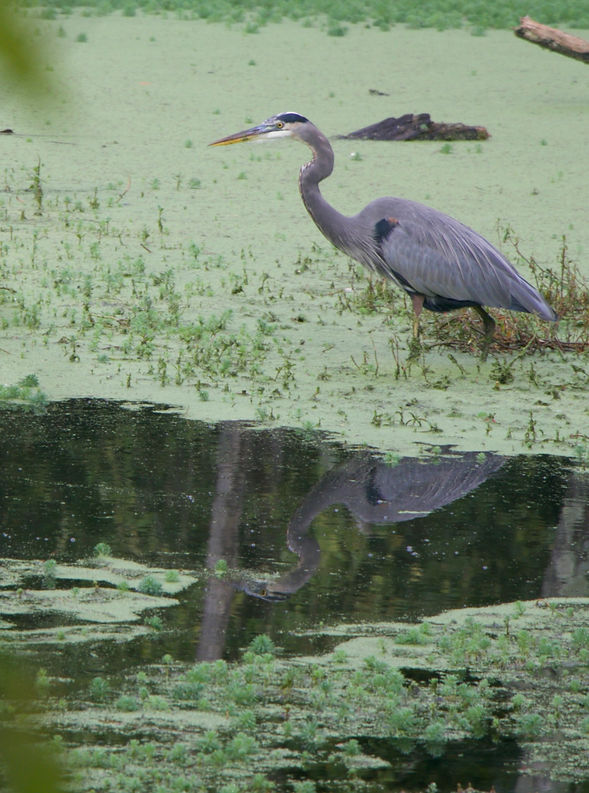
A great blue heron rests in the water at Murfree Spring Wetlands.
The boardwalk was closed to the public in December of 2022 for structural maintenance. Necessary repairs have been complicated and costly, but the trail has now partially reopened. The professional and amateur photographers hoping to capture the perfect shot of river otters or great blue herons have already found their way back, along with students of the natural sciences experiencing the field outside the classroom. In the quiet hours of dusk and dawn, they speak just above a whisper, excitedly relating their sightings of the day.
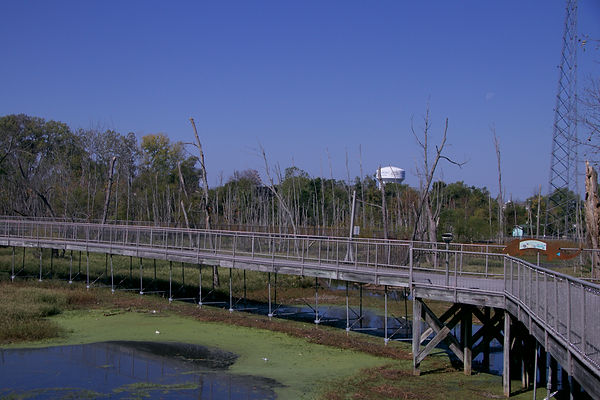
A section of boardwalk over the water at Murfree Spring Wetlands.
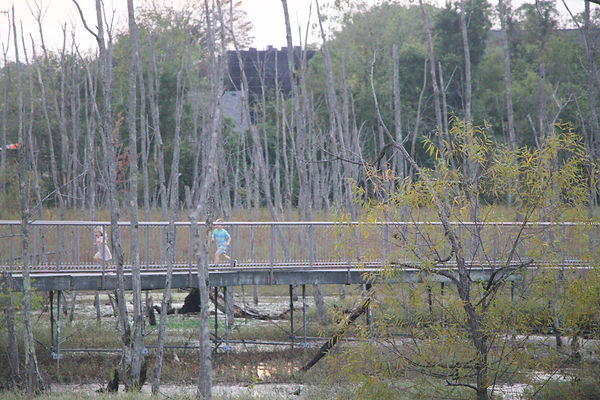
In the middle of the day a noisier crowd populates the wetland trails. Families with young children often pair a wetlands walk with a visit to the Discovery Center at Murfree Spring, the city’s children’s science museum. It is also a popular field trip destination for Rutherford County Schools students. Along with their caretakers or educators, kids learn about the water cycle, conservation, and the history of Murfree Spring.
Children run across a recently reopened section of boardwalk at Murfree Spring Wetlands.
This freshwater spring has always been the beating heart of the community. According to park signage, the Shawnee and Cherokee used it as a water supply in the 1700s. After Murfreesboro was settled, the spring was the city’s primary fresh water source for many years. The presence of fresh water made Murfreesboro's early growth and development possible. Today this same location is a source of peace and refuge for wildlife and nature lovers alike.

The blue sky is reflected in a pool of water at Murfree Spring Wetlands.

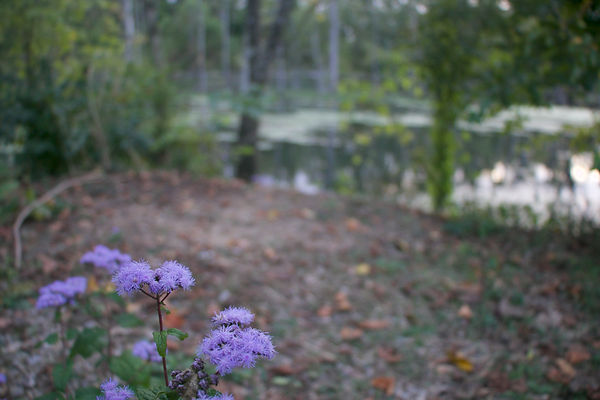

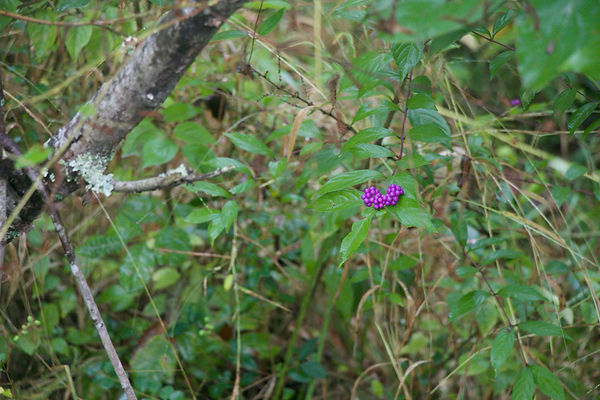
The colors of nature are in abundance in the plants growing at Murfree Spring Wetlands.


Birds spotted at Murfree Spring Wetlands include a Canada Goose, cardinals, a great blue heron, a yellow-crowned night heron, a downy woodpecker, and a mallard.


A variety of mammals, reptiles, and insects encountered by the author at Murfree Spring Wetlands. Sadly, no otters.

The WGNS radio tower at sunset. The tower is located within the wetlands. It serves as another odd reminder of the park's midtown location.
